My Inquiry
 About us
 BOM
BOM

Pioneering New Horizons
In the dynamic landscape of modern technology, two advancements are emerging as key drivers of innovation: flexible display driver chips and terahertz sensors. These technologies, while distinct in their functionality, are both poised to reshape multiple industries and our daily lives.
Flexible display driver chips are at the heart of the rapidly growing flexible display market. Unlike traditional rigid display driver chips, their flexible counterparts are designed to bend, fold, and conform to various shapes without compromising performance. This flexibility is achieved through the use of advanced materials and manufacturing techniques. For instance, organic thin - film transistors (OTFTs) are commonly used in flexible display driver chips. These transistors are fabricated on flexible substrates, such as plastic or metal foils, enabling the creation of lightweight and bendable electronic circuits.
The applications of flexible display driver chips are vast. In the consumer electronics sector, they are revolutionizing the design of smartphones and wearable devices. Foldable smartphones with flexible displays offer larger screen real estate when unfolded, while remaining compact and portable when folded. Wearable devices, such as smartwatches and fitness trackers, can now feature flexible displays that wrap around the wrist comfortably, providing a more immersive user experience. Beyond consumer electronics, flexible displays are also finding their way into automotive interiors. Flexible dashboards and displays can be customized to fit the unique contours of vehicle cockpits, enhancing both the aesthetics and functionality of the driving experience.
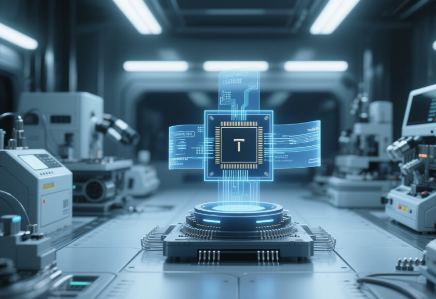
However, the development of flexible display driver chips is not without its challenges. Ensuring high - resolution and accurate color reproduction on flexible displays is a complex task. The flexibility of the substrate can cause mechanical stress on the electronic components, potentially leading to performance degradation over time. Additionally, manufacturing flexible display driver chips at scale while maintaining high yield rates and cost - effectiveness remains a significant hurdle for the industry.
Terahertz sensors, on the other hand, operate in the terahertz frequency range, which lies between microwaves and infrared waves. These sensors have the unique ability to penetrate certain materials, such as plastics, paper, and fabrics, without causing harm, making them ideal for non - invasive detection and imaging applications. For example, in security screening at airports and public venues, terahertz sensors can detect hidden objects, such as weapons or explosives, beneath clothing without the need for physical contact or ionizing radiation. This provides a safer and more efficient screening process compared to traditional methods.
In the medical field, terahertz sensors show great promise for early disease detection. They can detect subtle changes in tissue properties, such as moisture content and density, which may indicate the presence of diseases like skin cancer or breast cancer at an early stage. Moreover, terahertz sensors are also being explored for use in quality control in industries. They can be used to inspect the internal structure of materials, such as detecting flaws in semiconductors or monitoring the thickness of coatings on products.
Despite their potential, terahertz sensors face several challenges. One of the main issues is the relatively low sensitivity of current terahertz sensors, which limits their ability to detect weak signals. Developing more sensitive and efficient terahertz detectors is an active area of research. Additionally, the cost of terahertz sensor systems is still relatively high, which restricts their widespread adoption in some applications.
As research and development efforts continue to address these challenges, flexible display driver chips and terahertz sensors are set to become increasingly important in the technological ecosystem. They represent the forefront of innovation, offering new possibilities for more versatile, efficient, and intelligent solutions across various sectors.
n of complex electronic systems. Fan - Out Wafer - Level Packaging (FOWLP) is one such technology that has gained significant momentum. Unlike traditional packaging methods, FOWLP allows for the redistribution of electrical connections on the wafer level, eliminating the need for bulky printed circuit boards. This results in a more compact form factor and reduced signal delay, facilitating the integration of more components into a smaller space. For example, in the development of high - performance mobile processors, FOWLP enables the incorporation of multiple cores, memory modules, and I/O interfaces in a single package, significantly boosting power density.

However, as power density increases, so does the heat generated by these densely packed components. Thermal management has thus become a make - or - break factor in the performance and reliability of electronic devices. Phase - change materials (PCMs) are emerging as a key solution in this regard. PCMs can absorb and store large amounts of heat during the phase transition from solid to liquid, effectively regulating temperature fluctuations. In electronics, PCMs are often integrated into the packaging layers, where they act as a thermal buffer, preventing overheating and ensuring stable operation. A recent study showed that the use of PCMs in laptop batteries can reduce peak operating temperatures by up to 15°C, extending battery life and improving overall system performance.
The integration of artificial intelligence (AI) into thermal management systems is another groundbreaking development. AI - enabled sensors and algorithms can continuously monitor the temperature and power consumption of electronic components in real - time. Based on this data, the system can dynamically adjust the cooling strategy, optimizing energy efficiency while maintaining optimal operating temperatures. For instance, in data centers, AI - driven thermal management systems can predict hotspots before they occur and direct cooling resources precisely where they are needed, reducing energy waste by up to 30%.
From an environmental perspective, the convergence of advanced packaging and thermal management is also driving sustainable innovation. The use of biodegradable materials in packaging, such as plant - based polymers, not only reduces the environmental impact of electronic waste but also offers comparable thermal and mechanical properties to traditional plastics. Additionally, more efficient thermal management means lower energy consumption, contributing to a reduced carbon footprint.
As the demand for smaller, faster, and more energy - efficient electronic devices continues to grow, the synergy between advanced packaging and thermal management will play an increasingly vital role. The future holds the promise of even more innovative solutions, such as 3D - printed thermal structures integrated directly into the packaging and self - healing materials that can repair thermal interfaces over time. These advancements will not only fuel the next generation of consumer electronics but also have far - reaching implications for industries such as automotive, aerospace, and healthcare, where reliable and high - performing electronics are essential.
Related information

- 2025.01.15 The Unsung Heroes of Technological Progress
- 2025.01.15 Pushing the Boundaries of Innovation
- 2025.01.15 Unleashing Unprecedented Potential

- 4,000+ Daily Average RFQ

- 12,000,000+ SKUs

- 2,900+ Worldwide Manufacturers

- 9,000+ ㎡ In-stock Warehouse