My Inquiry
 About us
 BOM
BOM

Unleashing Unprecedented Potential
In the dynamic landscape of advanced technological advancements, carbon nanotube transistors and biocompatible sensors have emerged as two groundbreaking innovations, each poised to redefine the boundaries of their respective fields and bring about far - reaching impacts.
Carbon nanotube transistors represent a significant leap forward in semiconductor technology. These tiny, cylindrical structures, composed of rolled - up sheets of carbon atoms, possess extraordinary electrical properties. With diameters measured in nanometers, carbon nanotubes exhibit excellent electrical conductivity, far surpassing that of traditional silicon - based materials. Their high electron mobility allows for faster signal transmission, making them ideal candidates for next - generation high - performance computing applications.
In the realm of computing, carbon nanotube transistors have the potential to revolutionize microprocessor design. Traditional silicon transistors are rapidly approaching their physical limits in terms of miniaturization and performance. Carbon nanotube transistors, on the other hand, can be fabricated at much smaller scales, enabling the creation of chips with higher integration densities and lower power consumption. This could lead to the development of super - fast computers that consume significantly less energy, reducing both the environmental impact and operational costs of data centers. Additionally, in the field of flexible electronics, carbon nanotube transistors can be integrated onto flexible substrates, opening up new possibilities for bendable and stretchable electronic devices, such as roll - up displays and wearable sensors.
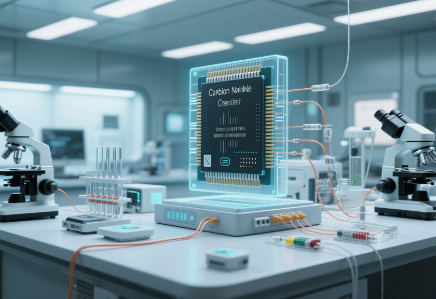
However, the widespread adoption of carbon nanotube transistors is hindered by several challenges. One of the major obstacles is the difficulty in mass - producing high - quality, defect - free carbon nanotubes with consistent properties. Controlling the alignment and assembly of carbon nanotubes during the manufacturing process remains a complex task. Moreover, developing reliable methods for integrating carbon nanotube transistors into existing semiconductor manufacturing processes is another area that requires further research and innovation.
Biocompatible sensors, on the other hand, are designed to interact seamlessly with biological systems while minimizing adverse reactions. These sensors are crafted from materials that are non - toxic, non - immunogenic, and can coexist safely within the human body or other living organisms. They play a crucial role in modern healthcare, enabling real - time monitoring of various physiological parameters.
For example, in the management of chronic diseases like diabetes, biocompatible glucose sensors can be implanted under the skin to continuously measure blood glucose levels. This provides patients with more accurate and frequent data, allowing for better control of their condition and reducing the risk of complications. In the field of neurology, biocompatible sensors can be used to monitor brain activity, helping in the diagnosis and treatment of neurological disorders such as epilepsy. These sensors can detect subtle electrical signals from neurons, providing valuable insights into the brain's functioning.
Beyond healthcare, biocompatible sensors also have applications in environmental monitoring. They can be used to detect the presence of pollutants or toxins in water bodies or soil, with the ability to integrate into biological systems for more accurate and long - term monitoring.
Nevertheless, biocompatible sensors face their own set of challenges. Ensuring the long - term stability and reliability of these sensors within biological environments is a significant concern. Biological fluids and tissues can cause degradation of the sensor materials over time, affecting their performance. Additionally, developing biocompatible sensors that can provide highly sensitive and accurate measurements while maintaining a small size and low power consumption is an ongoing area of research.
As scientists and engineers continue to overcome these challenges, carbon nanotube transistors and biocompatible sensors are set to become integral parts of a future filled with more powerful, efficient, and intelligent technological solutions. Their development and widespread implementation will not only drive progress in various industries but also improve the quality of life for people around the world.
Related information

- 2025.01.15 The Unsung Heroes of Technological Progress
- 2025.01.15 Pushing the Boundaries of Innovation
- 2025.01.15 Pioneering New Horizons

- 4,000+ Daily Average RFQ

- 12,000,000+ SKUs

- 2,900+ Worldwide Manufacturers

- 9,000+ ㎡ In-stock Warehouse