My Inquiry
 About us
 BOM
BOM

Pushing the Boundaries of Innovation
In the ever - advancing landscape of cutting - edge technologies, superconducting qubits and neuromorphic photonics stand out as two revolutionary concepts that are set to reshape the future of computing and information processing.
Superconducting qubits serve as the fundamental building blocks of quantum computers. Unlike classical bits, which can represent either a 0 or a 1, qubits can exist in a superposition of both states simultaneously. Superconducting qubits achieve this quantum state by leveraging the unique properties of superconducting materials, which exhibit zero electrical resistance when cooled to extremely low temperatures, typically near absolute zero.
One of the most significant advantages of superconducting qubits lies in their potential for solving complex problems that are beyond the reach of classical computers. For example, in the field of cryptography, quantum computers based on superconducting qubits could break many of the encryption algorithms currently in use, which rely on the difficulty of factoring large numbers. On the other hand, they also offer the possibility of developing unbreakable quantum - resistant cryptographic methods. In drug discovery, superconducting qubits can simulate the behavior of molecules at an atomic level, enabling researchers to quickly identify potential drug candidates and accelerate the development process.
However, the development of superconducting qubits is fraught with challenges. Maintaining the extremely low temperatures required for superconductivity demands sophisticated cryogenic systems, which are both expensive and energy - intensive. Additionally, qubits are highly sensitive to external disturbances, such as electromagnetic noise and thermal fluctuations. Even the slightest interference can cause decoherence, a process where the quantum state of the qubit collapses, leading to errors in computations. Researchers are constantly exploring new materials and techniques to improve qubit coherence times and reduce the impact of environmental noise.
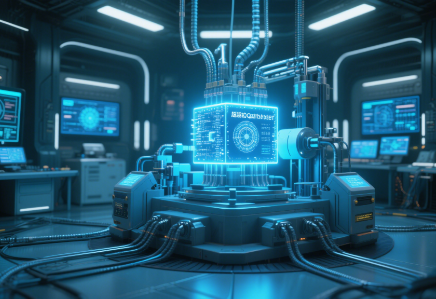
Neuromorphic photonics, on the other hand, combines the principles of neuroscience with photonics, the science of light - based technologies. This emerging field aims to create computing systems that mimic the structure and function of the human brain, using light instead of electrical signals for information processing. Photons have several advantages over electrons in this context. They can travel at the speed of light, enabling much faster data transmission, and they do not generate heat or electrical interference when interacting with each other.
In practical applications, neuromorphic photonic systems show great promise in artificial intelligence and machine learning. They can perform complex pattern recognition tasks, such as image and speech recognition, with high efficiency and low power consumption. For instance, in security surveillance, these systems can quickly analyze video feeds to detect and identify suspicious activities in real - time. Moreover, neuromorphic photonics could also be applied in high - performance computing, where the ability to process large amounts of data in parallel, similar to the brain's neural networks, is crucial.
Despite its potential, neuromorphic photonics also faces obstacles. Integrating photonic components on a chip with high precision is a complex engineering challenge. Developing efficient optical interconnects and photodetectors that can interface seamlessly with other components is another area that requires further research. Additionally, programming and training neuromorphic photonic systems in a way that maximizes their performance while minimizing errors is still an open question in the field.
As scientists and engineers continue to tackle these challenges, superconducting qubits and neuromorphic photonics are on the verge of transforming multiple industries. They represent a new frontier in technology, offering the potential for faster, more efficient, and more intelligent computing solutions that could have far - reaching implications for everything from scientific research to everyday life.
Related information
- 2025.01.15 The Unsung Heroes of Technological Progress
- 2025.01.15 Pioneering New Horizons
- 2025.01.15 Unleashing Unprecedented Potential

- 4,000+ Daily Average RFQ

- 12,000,000+ SKUs

- 2,900+ Worldwide Manufacturers

- 9,000+ ㎡ In-stock Warehouse