My Inquiry
 About us
 BOM
BOM

Paving the Way for a New Technological Era
1/15/2025 3:02:59 PM
In the constantly evolving landscape of cutting - edge technologies, memristors and reconfigurable hardware have emerged as two innovative forces with the potential to revolutionize the way we think about and use electronic systems.
Memristors, short for memory resistors, are a relatively new addition to the fundamental electrical components alongside resistors, capacitors, and inductors. Unlike traditional resistors, whose resistance remains constant under normal circumstances, memristors have the unique property of "remembering" the amount of charge that has flowed through them. Once the power is turned off, a memristor retains its last resistance state, which makes it an ideal candidate for non - volatile memory applications.This characteristic is already being explored in the development of next - generation data storage solutions. For example, in the field of high - density data centers, memristor - based memory can potentially offer faster read and write speeds, lower power consumption, and higher storage densities compared to current flash memory technologies. Additionally, memristors could play a crucial role in neuromorphic computing, mimicking the structure and function of the human brain. By emulating the synaptic connections in neurons, memristor - based neural networks can perform complex pattern recognition and machine - learning tasks more efficiently, consuming less energy in the process.
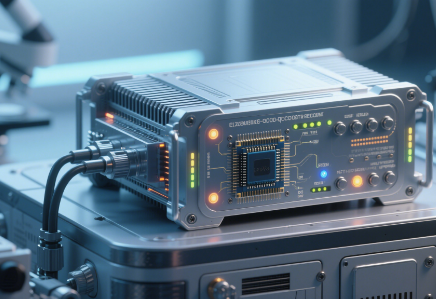
However, the large - scale commercialization of memristors still faces several obstacles. One of the main challenges is the difficulty in precisely controlling the resistance state of memristors during manufacturing, which can lead to variations in device performance. Another issue is the relatively high cost of fabricating memristor - based devices compared to traditional semiconductor components, which limits their widespread adoption in the short term.
Reconfigurable hardware, on the other hand, represents a different but equally transformative approach. Devices such as field - programmable gate arrays (FPGAs) allow users to reprogram the hardware's logic and functionality after it has been manufactured. This flexibility makes reconfigurable hardware highly adaptable to different tasks and applications.In the area of artificial intelligence (AI), FPGAs are increasingly being used for accelerating deep - learning algorithms. Unlike general - purpose processors, FPGAs can be customized to perform specific operations required by AI models, resulting in significant speed - ups and reduced power consumption. For instance, in autonomous vehicles, FPGAs can be configured to process the vast amounts of sensor data in real - time, enabling the vehicle to make quick and accurate decisions for safe navigation.
Reconfigurable hardware also finds applications in the aerospace and defense sectors. In military communication systems, FPGAs can be reconfigured on - the - fly to adapt to changing communication protocols and security requirements, enhancing the system's resilience and flexibility.
Nevertheless, working with reconfigurable hardware has its own set of challenges. Programming FPGAs requires specialized knowledge and tools, which can be a barrier for some developers. Moreover, the limited resources on an FPGA, such as logic gates and memory, mean that careful design and optimization are needed to ensure the best performance for complex applications.
As researchers and engineers continue to address these challenges, memristors and reconfigurable hardware are set to become integral parts of future technological advancements. They offer new possibilities for more efficient, adaptable, and intelligent electronic systems, opening the door to a new era of innovation.Related information

- 2025.01.15 The Unsung Heroes of Technological Progress
- 2025.01.15 Pushing the Boundaries of Innovation
- 2025.01.15 Pioneering New Horizons

- 2025.01.15 Unleashing Unprecedented Potential

- 4,000+ Daily Average RFQ

- 12,000,000+ SKUs

- 2,900+ Worldwide Manufacturers

- 9,000+ ㎡ In-stock Warehouse