My Inquiry
 About us
 BOM
BOM

Transforming the Technological Landscape
In the ever - evolving realm of modern technology, two advancements are emerging as game - changers, quietly revolutionizing the way we power and process information: gallium nitride (GaN) power devices and system - on - chip (SoC) integration.
Gallium nitride power devices have been making significant waves in the energy - efficient power management sector. Unlike traditional silicon - based power devices, GaN has a wider bandgap, higher electron mobility, and superior thermal conductivity. These inherent properties enable GaN power devices to operate at higher frequencies, with lower switching losses, and withstand higher voltages.
For instance, in the rapidly growing electric vehicle (EV) industry, GaN - based inverters are becoming increasingly popular. They can convert direct current (DC) from the vehicle's battery into alternating current (AC) to drive the electric motor more efficiently. This results in a smaller, lighter inverter design, which not only saves space in the vehicle but also improves overall energy efficiency, extending the vehicle's driving range. Moreover, in the realm of consumer electronics, GaN power devices are being used in fast - charging adapters. A GaN - based charger can deliver high - power charging to smartphones, laptops, and other devices in a much smaller form factor compared to traditional chargers, reducing the charging time significantly without overheating.
However, the widespread adoption of GaN power devices still faces some hurdles. One of the main challenges is the high cost of GaN material production and device fabrication. Additionally, developing reliable packaging techniques that can handle the high - voltage and high - frequency operation of GaN devices while maintaining thermal performance remains a key area of research.
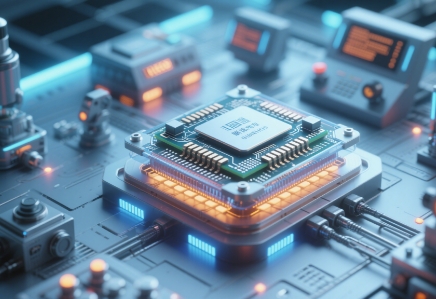
On the other hand, system - on - chip (SoC) integration is redefining the boundaries of miniaturization and performance in electronic systems. SoC technology integrates multiple components, such as processors, memory, and various input/output interfaces, onto a single semiconductor chip. This integration not only reduces the physical size of electronic devices but also enhances their performance by minimizing signal delays and power consumption.
In the field of Internet of Things (IoT), SoC has been a driving force. IoT devices often require a combination of sensing, processing, and communication capabilities in a compact and power - efficient form. SoCs provide an ideal solution, allowing for the seamless integration of all necessary functions. For example, smart home sensors equipped with SoCs can continuously monitor environmental conditions, such as temperature, humidity, and air quality, process the data locally, and communicate with a central hub or the cloud in real - time, all while consuming very little power. This enables long - lasting battery life, reducing the need for frequent battery replacements.
In the mobile computing industry, SoCs have enabled smartphones and tablets to achieve desktop - like performance in a handheld device. With the integration of powerful multi - core processors, high - speed graphics processing units (GPUs), and ample memory on a single chip, mobile devices can now run complex applications, play high - definition games, and perform multitasking with ease.
Yet, SoC integration also comes with its own set of difficulties. Designing a complex SoC requires highly specialized knowledge and advanced design tools. Ensuring the compatibility and proper functioning of all integrated components is a complex task. Moreover, as the number of components on the chip increases, heat dissipation becomes a major concern, which can affect the overall performance and reliability of the SoC.
As research and development efforts continue to address these challenges, gallium nitride power devices and system - on - chip integration are poised to have an even greater impact on our lives. They are not just technological advancements; they are the building blocks for a more energy - efficient, compact, and intelligent future.
Related information

- 2025.01.15 The Unsung Heroes of Technological Progress
- 2025.01.15 Pushing the Boundaries of Innovation
- 2025.01.15 Pioneering New Horizons
- 2025.01.15 Unleashing Unprecedented Potential

- 4,000+ Daily Average RFQ

- 12,000,000+ SKUs

- 2,900+ Worldwide Manufacturers

- 9,000+ ㎡ In-stock Warehouse